
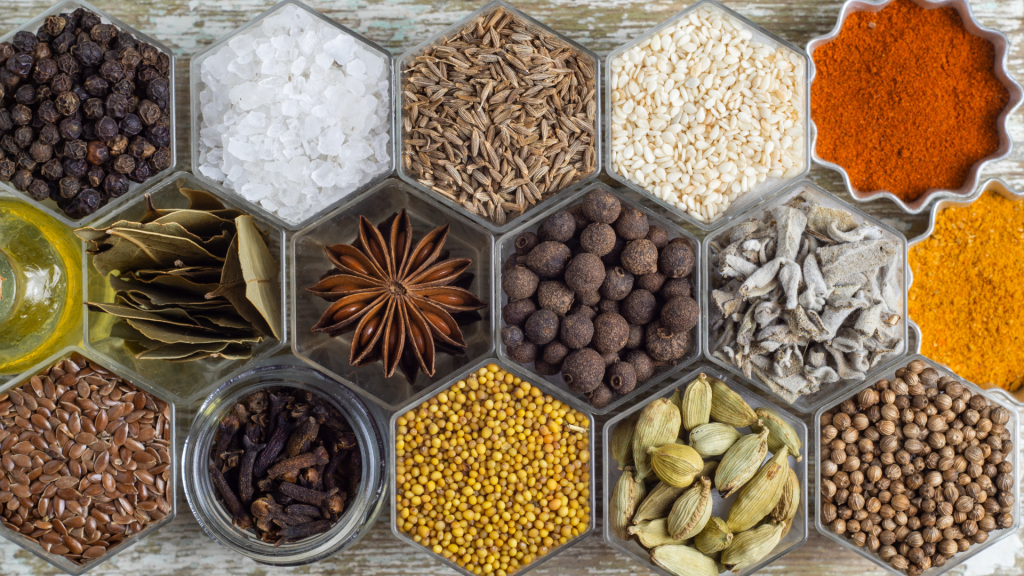
Embark on a culinary adventure with Harriet’s of Hove as we take you around the globe through the rich and aromatic world of herbs and spices. From the zesty blends of the Americas to the fragrant mixes of Asia, each region offers unique flavours that can transform your cooking while offering numerous health benefits. Whether you’re a seasoned chef or a curious foodie, join us as we explore how these natural wonders can spice up your meals and your health.
Mediterranean Marvels
The Mediterranean basin, with its rich culinary traditions, offers a treasure trove of flavours that elevate simple ingredients to sublime experiences. Here are some of the most distinctive herbs and spices from this region:
Basil (Ocimum basilicum): This herb is synonymous with Mediterranean cooking, particularly Italian, where it’s used in everything from pesto to caprese salads. Basil is known for its anti-inflammatory properties and its ability to fight infection.
Bay Leaves (Laurus nobilis): Essential in stews, soups, and sauces, bay leaves add a subtle depth of flavour. They contain compounds that can aid in digestion and help alleviate respiratory conditions.
Chives (Allium schoenoprasum): Often sprinkled on dishes as a garnish, chives add a mild onion-like flavour. They’re beneficial for heart health and can help reduce the risk of cancer.
Ground Cinnamon: A versatile spice used in both sweet and savoury dishes. Cinnamon is famed for its blood sugar regulating properties and can also enhance digestive health.
Cinnamon Quills: These are ideal for infusing liquids, adding a sweet and woody flavor. Like ground cinnamon, the quills are rich in antioxidants and possess anti-inflammatory qualities.
Dill Weed (Anethum graveolens): Common in Eastern European cooking, dill is often added to fish, yogurt sauces, and pickles. It supports digestion and can help reduce swelling and cramps.
Ground Nutmeg: Used in desserts, potato dishes, and sauces, nutmeg adds a warm, spicy flavour. It is also known for its ability to relieve pain, soothe indigestion, and improve cognitive function.
Whole Nutmeg: Grating fresh nutmeg allows for a potent flavour and fragrance. It shares similar medicinal benefits to ground nutmeg, including detoxifying the body.
Parsley (Petroselinum crispum): More than just a garnish, parsley can brighten flavours in dishes and contains high levels of vitamins A and C, promoting immune health and providing anti-inflammatory benefits.
Rosemary (Rosmarinus officinalis): This robust herb is fantastic with meats and bread. It’s known for improving memory, aiding in digestion, and providing antioxidant benefits.
Sage (Salvia officinalis): Used in stuffing, infused in butter, and paired with meats, sage is beneficial for cognitive function and has been traditionally used to lower cholesterol and inflammation.
Tarragon (Artemisia dracunculus): Often featured in French cuisine, tarragon has a bittersweet flavour that compliments chicken and seafood. It’s great for sleep, appetite control, and pain relief.
Thyme (Thymus vulgaris): A staple in Mediterranean and European cooking, thyme is perfect in sauces and with poultry. It’s antibacterial and can help treat coughs.
Marjoram (Origanum majorana): Similar to oregano but sweeter and milder, marjoram is excellent in soups and sauces. It has anti-inflammatory properties and can aid in digestion and cardiovascular health.
Smoked Paprika: Made from smoked, dried peppers, this spice adds a rich, smoky flavour to dishes like goulash and paella. It’s loaded with antioxidants and enhances energy and mood.
Sweet Paprika: This milder version of paprika is often used in European stews and soups. It provides vitamin A, which benefits eye health and skin integrity.
Each of these herbs and spices not only brings its unique flavours to dishes but also offers significant health benefits, making them staples in both kitchens and traditional medicine across the Mediterranean.
Middle Eastern Aromatics
The Middle East is famous for its vibrant spice bazaars that fill the air with a mosaic of scents. Here are some key herbs and spices that are essential to Middle Eastern cooking:
Cumin (Cuminum cyminum): Earthy and slightly nutty, cumin is a cornerstone of Middle Eastern spice blends, including curry powders and masalas. It’s excellent in stews, soups, and rice dishes. Cumin is also known for aiding digestion and improving immunity.
Sumac (Rhus coriaria): With its deep red hue and tangy lemon flavour, sumac is often used to season salads, meats, and rice. It’s also a key component in the spice mix za’atar. Beyond its culinary uses, sumac is rich in antioxidants and may help regulate blood sugar levels.
Cardamom (Elettaria cardamomum): Known for its intense, sweet flavour, cardamom is used in both savoury dishes and desserts. It’s particularly common in spice mixes and coffees. Cardamom is valued for its ability to relieve digestive issues and its diuretic properties.
Turmeric (Curcuma longa): This bright yellow spice is essential in many spice blends and gives curry its distinctive colour. Turmeric is highly praised for its anti-inflammatory effects and its potential role in reducing the risk of chronic diseases.
Coriander (Coriandrum sativum): Both the seeds and leaves of the coriander plant are used extensively throughout the Middle East. The seeds have a lemony citrus flavor when crushed and are popular in spice blends and as a seasoning for meat and vegetable dishes. Coriander seeds are known for their health benefits, including lowering blood sugar and cholesterol levels.
These spices and herbs are pivotal in creating the layered flavours characteristic of Middle Eastern cuisine. They also bring a host of health benefits, from digestive aids to anti-inflammatory properties, enhancing both the dishes they season and the health of those who enjoy them.
The Spice Pantheon of Asia
Asia’s culinary landscape is as diverse as it is vast, with each region offering unique spices that form the backbone of its food culture. Here are some essential Asian spices:
Cardamom Pods (Elettaria cardamomum): Often used in South Asian desserts and teas, cardamom pods deliver a sweet, floral aroma and a complex flavor profile. Medically, cardamom is noted for its potential in digestive health and as a natural diuretic.
Ground Cardamom: This form of cardamom is convenient for baking and cooking, infusing dishes with a concentrated burst of its unique flavour. It also shares similar health benefits to the whole pods, including easing digestion and possibly lowering blood pressure.
Cayenne Pepper (Capsicum annuum): Known for its pungent heat, cayenne pepper is a staple in spice blends and condiments. It boosts metabolism, aids in pain relief, and supports digestive health.
Chinese Five Spice: A powerful blend of star anise, cloves, Chinese cinnamon, Sichuan pepper, and fennel seeds, this mix captures essential flavours used across many Chinese recipes. Each spice contributes antioxidant properties, making the blend a healthy addition to foods.
Coriander Seeds (Coriandrum sativum): These seeds are foundational in many spice mixes and are believed to support hormonal balance and digestive health. Their lemony citrus flavour when crushed is perfect for curries and soups.
Ground Coriander: Offers a milder taste than the whole seeds and is easier to incorporate into marinades and stews. Like the seeds, it’s known for anti-inflammatory and cholesterol-lowering effects.
Cumin Seeds (Cuminum cyminum): These earthy, aromatic seeds are crucial in many Asian cuisines, particularly Indian, for their distinctive flavour. Health-wise, cumin is praised for enhancing digestion and providing a good source of iron.
Ground Cumin: Provides the same benefits as the seeds but is better for smooth, thick sauces and gravies where a finer texture is desired.
Fenugreek Seeds (Trigonella foenum-graecum): These have a slightly sweet, nutty flavor ideal for sauces and spice blends. They are recognized for their ability to improve insulin sensitivity and lower blood sugar levels.
Garam Masala: This warming spice mix often includes coriander, cumin, cardamom, cloves, black pepper, cinnamon, and nutmeg. It not only adds depth to dishes but also may help in digestion and boost metabolism.
Garlic Powder (Allium sativum): While it offers a more concentrated flavour than fresh garlic, it’s essential in rubs, stews, and as a seasoning for meats and vegetables. Garlic powder can reduce blood pressure and support cardiovascular health.
Ground Ginger (Zingiber officinale): A more convenient form of ginger that still provides the root’s peppery, slightly sweet flavour and its renowned medicinal benefits, including anti-inflammatory effects and gastrointestinal relief.
Star Anise (Illicium verum): Featured in both sweet and savoury dishes, this spice is crucial for its licorice-like flavour and is valued for its digestive benefits, including reducing bloating and settling upset stomachs.
Turmeric (Curcuma longa): This spice is celebrated not only for its ability to color and season foods but also for its profound anti-inflammatory and antioxidant properties, making it a staple in both culinary and medicinal contexts.
Whole Cloves (Syzygium aromaticum): These are often used in spice mixes and to infuse oils or broths, giving a warm, sweet flavour. Cloves are known for their pain-relieving properties and their ability to help regulate blood sugar levels.
Ground Cloves: Provide the same rich flavour as whole cloves but are easier to distribute throughout dishes. They share similar health benefits, including antimicrobial properties and liver protection.
Juniper Berries (Juniperus communis): Though less common in traditional Asian dishes, they can be used in meat marinades and to flavour certain beverages, offering cleansing properties and aiding digestion.
These spices and herbs are not just culinary delights but also carry significant health benefits, contributing to the holistic health practices common in Asian cultures.
Latin American Spice Fiesta
Latin American cuisine is a rich tapestry of flavours, each country contributing its own distinct spice blends and culinary herbs. Here are some of the most iconic spices and herbs from this region:
Cumin (Cuminum cyminum): Widely used in Cuban, Mexican, and Brazilian cuisines, cumin adds a smoky, earthy note to dishes. It’s indispensable in chilli powders and for marinating meats. Cumin is known for its aid in digestion and improving immunity.
Cilantro (Coriandrum sativum): Also known as coriander in some parts of the world, cilantro is used throughout Latin America. The leaves are often sprinkled over finished dishes as a garnish, while the seeds are ground and used in spice mixes. Cilantro is celebrated for its detoxifying properties.
Annatto (Bixa orellana): Derived from the seeds of the achiote tree, annatto is often used for its vibrant red colour as much as its flavour, which is slightly sweet and peppery. It’s a staple in Mexican and Brazilian dishes and is reputed to have antioxidant properties.
Chipotle Pepper (Capsicum annuum): A smoke-dried jalapeño that is a key ingredient in Mexican cooking. It lends a mild heat and a notably smoky flavour to salsas and meat dishes. Chipotles are also high in capsaicin, known for its pain-relieving properties.
Epazote (Dysphania ambrosioides): This herb is crucial in Mexican and Central American cooking, known for its strong, medicinal flavour that complements dishes containing beans, as it helps reduce their gaseous effect.
Chili Powder: A blend of ground chilli peppers and other spices such as cumin, garlic powder, and oregano. It’s the backbone of many stews, soups, and meats in Latin American cooking. Chili’s help boost metabolism and offer significant vitamin C.
These spices and herbs exemplify the diversity and richness of Latin American culinary traditions, showing how deeply these flavours are woven into the cultural fabric of the region.
Exploring the rich tapestry of herbs and spices from around the world not only enhances our cooking but also enriches our health. From the fiery kicks of Asian cuisine to the aromatic depths of European dishes, each spice and herb carries its own story and spectrum of benefits. Whether it’s the anti-inflammatory prowess of turmeric or the memory-boosting abilities of rosemary, incorporating these natural flavours into our daily meals offers a dual bounty of enhanced taste and wellness.
Embracing these spices means more than just adding flavour—it’s about bringing a piece of global tradition into our kitchens while nurturing our bodies with nature’s own medicine. So next time you reach for that jar of cinnamon or sprinkle of paprika, remember you’re not just cooking; you’re crafting a legacy of health and flavour passed down through generations.
Now, are you ready to spice up your kitchen repertoire and give your health a flavourful boost? Let Harriet’s of Hove guide you on this aromatic journey.